
The world is facing a food security crisis of unprecedented proportions in 2025, with hundreds of millions of people around the globe experiencing hunger, malnutrition, and food insecurity. The convergence of multiple factors, including climate change-driven crop failures, ongoing geopolitical conflicts, supply chain disruptions, rising food prices, population growth, and water scarcity, has created a perfect storm that is pushing food systems to their breaking point. According to the United Nations World Food Programme, approximately 783 million people worldwide are facing chronic hunger, while an additional 2.4 billion people experience moderate to severe food insecurity. The crisis is most acute in sub-Saharan Africa, South Asia, the Middle East, and parts of Latin America, but its effects are being felt across every continent, including in wealthy nations where food price inflation is straining household budgets and increasing demand at food banks. This article examines the root causes of the global food security crisis, the innovative solutions being developed to address it, and the urgent actions needed to ensure that every person on Earth has access to sufficient, safe, and nutritious food.
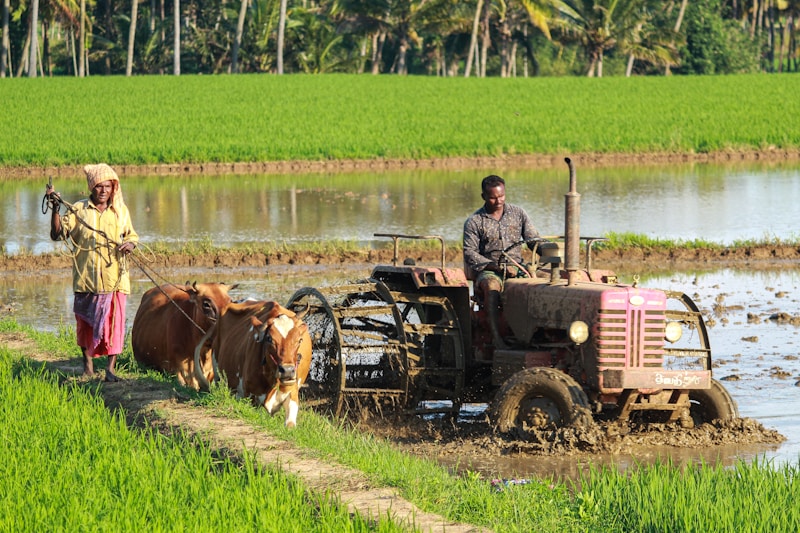
| The global food security crisis affects hundreds of millions of people, demanding innovative agricultural solutions and international cooperation. (Image: Unsplash - Free to Use) |
Climate Change: The Primary Driver of Food Insecurity
Climate change has emerged as the single most significant threat to global food production, disrupting agricultural systems that have sustained human civilization for thousands of years. Rising temperatures are reducing crop yields in many of the world's most important agricultural regions, with staple crops like wheat, rice, maize, and soybeans particularly vulnerable to heat stress during critical growth periods. Changes in precipitation patterns are causing prolonged droughts in some regions while triggering devastating floods in others, destroying crops and agricultural infrastructure. In East Africa, the Horn of Africa has experienced multiple consecutive failed rainy seasons, leading to severe drought conditions that have devastated livestock herds and crop production, pushing millions of people to the brink of famine. In South Asia, erratic monsoon patterns have alternated between catastrophic flooding and severe water shortages, disrupting the rice and wheat harvests that feed billions of people. In the American Midwest and Great Plains, intensifying droughts and heat waves are threatening corn and soybean production, while in Europe, unprecedented heat waves have reduced wheat yields in major producing countries like France, Germany, and Ukraine. The increasing frequency and intensity of extreme weather events, including tropical storms, hailstorms, and unseasonable frosts, add further unpredictability to agricultural production, making it increasingly difficult for farmers to plan and adapt.
Conflict, Displacement, and Supply Chain Disruptions
Armed conflicts around the world continue to be a major driver of food insecurity, disrupting agricultural production, destroying infrastructure, displacing farming communities, and blocking humanitarian aid from reaching those who need it most. The ongoing conflict in Ukraine, one of the world's largest exporters of wheat, corn, and sunflower oil, has had ripple effects across global food markets, driving up prices and reducing supplies for import-dependent nations in Africa and the Middle East. Conflicts in Sudan, Yemen, Syria, Myanmar, and the Democratic Republic of Congo have created severe humanitarian crises, with millions of people cut off from food supplies and unable to cultivate their land. Global supply chain disruptions, including shipping bottlenecks, port congestion, and trade restrictions imposed by countries seeking to protect their domestic food supplies, have further exacerbated food price inflation and reduced the availability of essential food items in many countries. The concentration of global food production and trade in a relatively small number of countries and companies creates systemic vulnerabilities, as disruptions in any one major producing or exporting region can have cascading effects across the entire global food system.
Innovative Solutions: Technology and Sustainable Agriculture
Despite the severity of the crisis, there is reason for cautious optimism as innovative solutions are being developed and deployed to strengthen food systems and improve food security. Precision agriculture technologies, which use sensors, drones, satellite imagery, and artificial intelligence to optimize farming practices, are helping farmers produce more food with fewer resources. These technologies enable precise application of water, fertilizers, and pesticides, reducing waste and environmental impact while increasing crop yields. Drought-resistant and climate-adapted crop varieties developed through advanced breeding techniques and genetic engineering are being introduced in vulnerable regions, helping farmers maintain production in the face of changing climate conditions. Vertical farming and controlled environment agriculture are enabling food production in urban areas and regions with limited arable land, using hydroponic and aeroponic systems that require significantly less water and no soil. Alternative protein sources, including plant-based meats, cultivated meat grown from animal cells, and insect-based protein, are being developed to reduce the enormous environmental footprint of traditional animal agriculture while providing nutritious food options. Blockchain technology is being used to improve supply chain transparency and traceability, reducing food fraud and waste while ensuring fair prices for farmers. Community-based approaches including urban gardens, cooperative farming models, and school feeding programs are strengthening local food systems and improving nutrition at the grassroots level.
The Urgent Need for Global Action
Addressing the global food security crisis requires unprecedented levels of international cooperation, investment, and political will. Governments must increase investment in agricultural research and development, strengthen social safety nets to protect the most vulnerable populations, and reform trade policies that distort food markets and disadvantage developing countries. International organizations including the United Nations, the World Bank, and the Food and Agriculture Organization must coordinate more effectively to deliver humanitarian assistance and build long-term resilience in food systems. The private sector has a crucial role to play in developing and scaling innovative technologies, investing in sustainable supply chains, and reducing food waste throughout the production and distribution process. Individuals can contribute by making more sustainable food choices, reducing personal food waste, and supporting organizations working to combat hunger and malnutrition. The global food security crisis is not an inevitable reality but rather a challenge that can be overcome through determined, coordinated, and sustained action. The cost of inaction is measured not only in economic terms but in human lives, and the world cannot afford to fail.



Leave a Comment